
By Kavitha Vipulananda, University of Melbourne
Construction productivity in Australian has fallen 53 per cent since the mid-1990s. Modern methods of building can reverse it, if we choose to scale them
Australia is not failing to build enough homes because we lack the workers, the demand or the political attention. We are failing to build enough homes because we have quietly become much worse at building them.
The Productivity Commission's research paper, Housing construction productivity: Can we fix it? found that the number of dwellings completed per hour worked has fallen by 53 per cent since 1994-95.
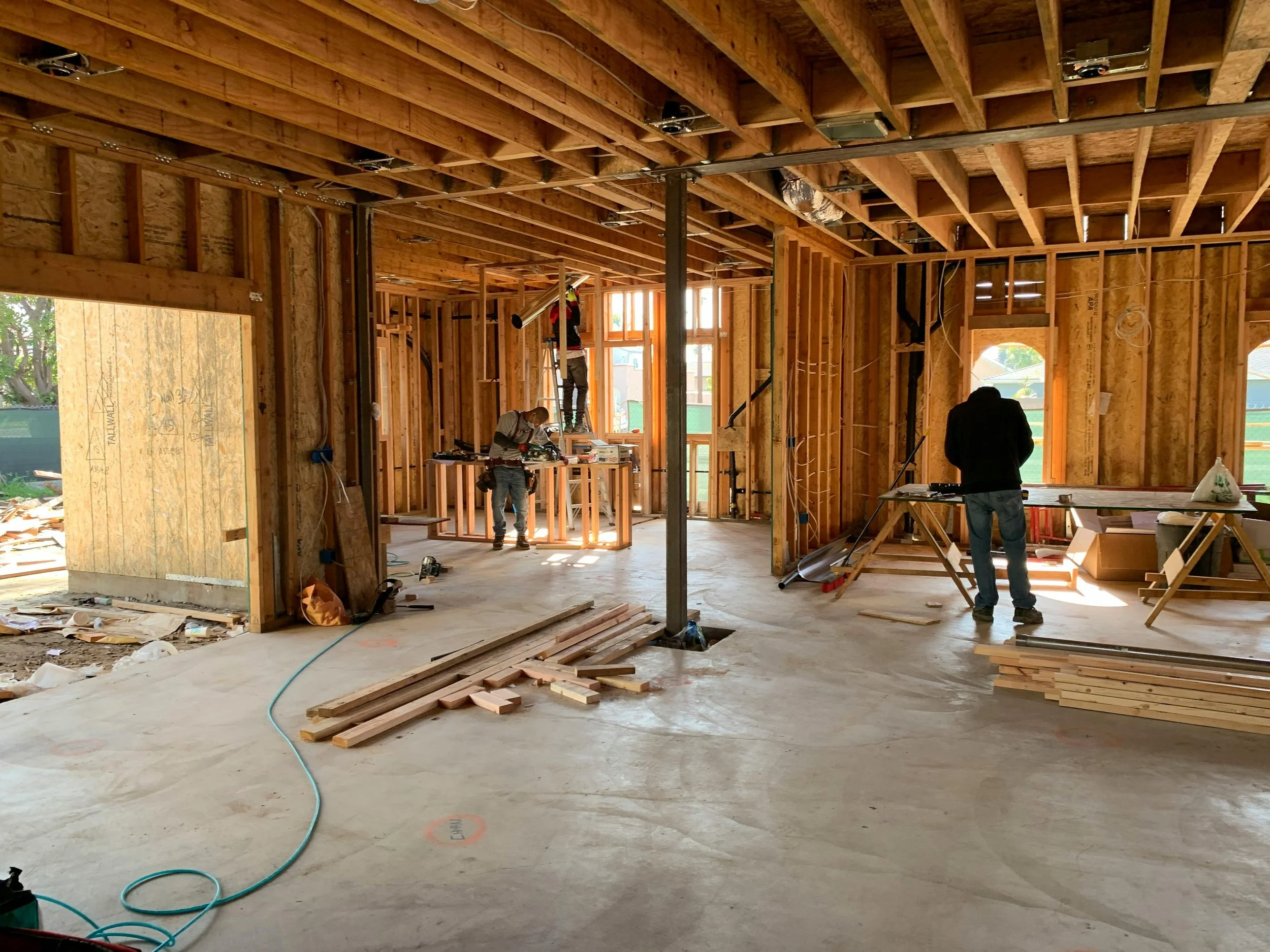
Australia has become quietly worse at building houses. Brett Rogers/Pexels
Even after adjusting for the fact that homes are now larger and higher quality than they were 30 years ago, labour productivity in the sector has still gone backwards by 12 per cent over the same period. And across the broader economy, labour productivity rose 49 per cent.
To put that gap in perspective, had the wider economy declined as sharply as housing construction, average Australian incomes would be around 41 per cent lower than they are today.
That is the structural problem hiding underneath every headline about housing affordability.
It is also why the country is on track to fall around 262,000 homes short of the 1.2 million national target by mid-2029, even with a National Housing Accord in place and significant funding behind it.
The human consequences are already visible.
According to Australia’s Productivity Commission 2026 Report on Government Services, 43 per cent of low-income renters receiving Commonwealth Rent Assistance are still in rental stress. Mission Australia reports 254,571 households on social housing waitlists, with 122,457 in greatest need on priority lists, a 12 per cent annual increase.
One in three people who needed crisis accommodation last year were turned away because there was nowhere to send them.
A new mortgage holder now spends 50 per cent of their income on housing. Tenants spend 33 per cent. Saving a deposit takes more than 10.6 years.
These are not market fluctuations. They are the downstream effects of a construction sector that has not modernised at the pace the country needs.
The technology to fix this already exists
The Productivity Commission found that traditional builds can take up to 12 months, while prefabricated builds can be finished in around 16 weeks.
Queensland's QBuild Modern Methods of Construction program is using modular techniques to deliver social and affordable housing at scale.
Australia is on track to fall around 262,000 homes short of the 1.2 million national housing target. Jakub Pabis/Pexels
In February 2025, robotics and 3D printing technology company, LUYTEN, completed Australia's first multi-storey 3D-printed house in outer Melbourne.
The build took five weeks. A traditional build would have taken eight to eleven months.
FBR Limited, an Australian robotics company, has developed bricklaying robots that work consistently, safely and faster than human teams. In Western Australia, another company, Contec, is using 3D concrete printing to build homes in days rather than months.
Australian innovation in this space is genuinely world class. What is missing is the policy architecture to scale it.
Modular construction accounts for less than five per cent of Australia's total building output.
The barriers are well understood: regulatory complexity across States, financing systems that treat modular homes differently from traditional builds, and an industry structure dominated by small firms that struggle to invest in innovation.
Research from the Committee for Economic Development of Australia (CEDA) found that Australian construction firms with 200 or more employees generate 86 per cent more revenue per worker than firms with five to 19 employees.
If Australian construction matched the firm size distribution of manufacturing, the industry would produce AUD$54 billion more revenue per year without a single additional worker.
That is the equivalent of gaining 150,000 construction workers in a sector currently struggling for labour.
Every one of these barriers has been solved somewhere else.
New Zealand's Auckland Unitary Plan upzoned three-quarters of residential land in 2016 and roughly doubled annual dwelling approvals within six years, with rents on three-bedroom homes 26 to 33 per cent lower than they would otherwise have been.
Singapore's Housing and Development Board has around 80 per cent of the population in publicly built homes, at a scale and speed Australia has not seen since the 1950s.
Four practical reforms could change this picture
Currently, a manufacturer in Melbourne has to re-certify its product simply to sell it in Brisbane – an unnecessary duplication of time and cost.
So, an obvious first step to fix this would be completing the national certification framework for prefabricated and modular construction, which is being developed by the Australian Building Codes Board. This would require all States to recognise certified modules for streamlined approval.
Secondly, set a 30 per cent target for modern methods of construction in all Commonwealth-funded social and affordable housing by 2028, rising to 50 per cent by 2032. Public procurement at this scale gives manufacturers the price stability and pipeline confidence they need to invest.
Third, reform construction financing so that banks and lenders treat completed modular homes on the same valuation and loan terms as traditional builds.
The current settings effectively penalise the technology that can solve the supply problem.
And finally, restore social housing to six per cent of total stock by 2035, returning it to the levels of the 1980s. The National Housing Supply and Affordability Council has identified this as the medium-term target needed to bring the system back into balance.
None of this is radical. Each lever has been tested somewhere, by someone, and the evidence is published.
The opportunity now is to bring these reforms together, rather than treating them as separate workstreams.
The housing shortfall is here, not somewhere in the future.
Treating it as a productivity challenge, rather than purely an economic one, opens up reforms that are evidence-based, already tested and within reach if there is the political will to act on them.
This article has been republished from Pursuit under a Creative Commons license. Read original here.