
By Professor Dan Hill, University of Melbourne
Our built environment – everything human-made that surrounds us; our buildings, parks, infrastructure – is the single largest driver of global climate change, resource depletion, biodiversity loss and waste.
The built environment industry is optimised for productivity rather than working within our planetary boundaries, so in our attempts to achieve the Government’s current housing targets, research suggests that we will blow our entire carbon budget just on housing alone.
Yet the industry remains largely unreformed, with its impact on our fragile ecosystems just as problematic as the carbon. In trying to solve one problem, we create many more.
But productivity is not an end in itself – it is a means to an end.
The impacts and direction of building are what’s important, rather than sheer volume alone. Are we building sustainably? Equitably? Do these homes improve health or diminish it? Are we creating local jobs? Has construction increased or reduced biodiversity?
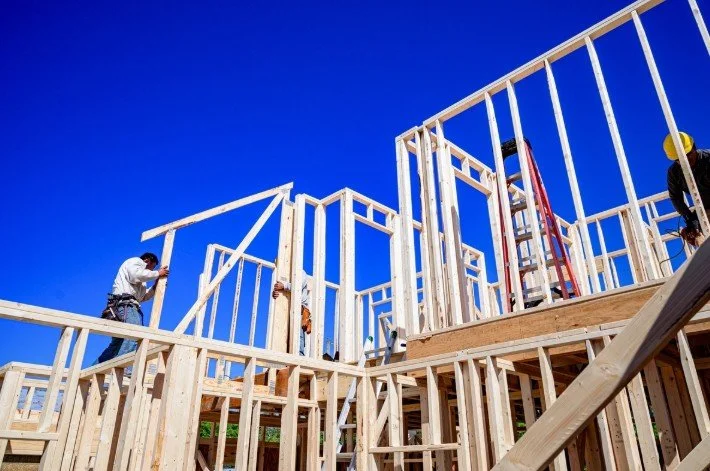
These questions largely come down to choices about building materials, and our latest report, Circle, suggests that we need a complete reorientation of the sector around ‘planet-aligned’ material choices.
In other words, we need to give the building industry a more meaningful sense of direction than simply ‘build baby build’.
Where does your building come from?
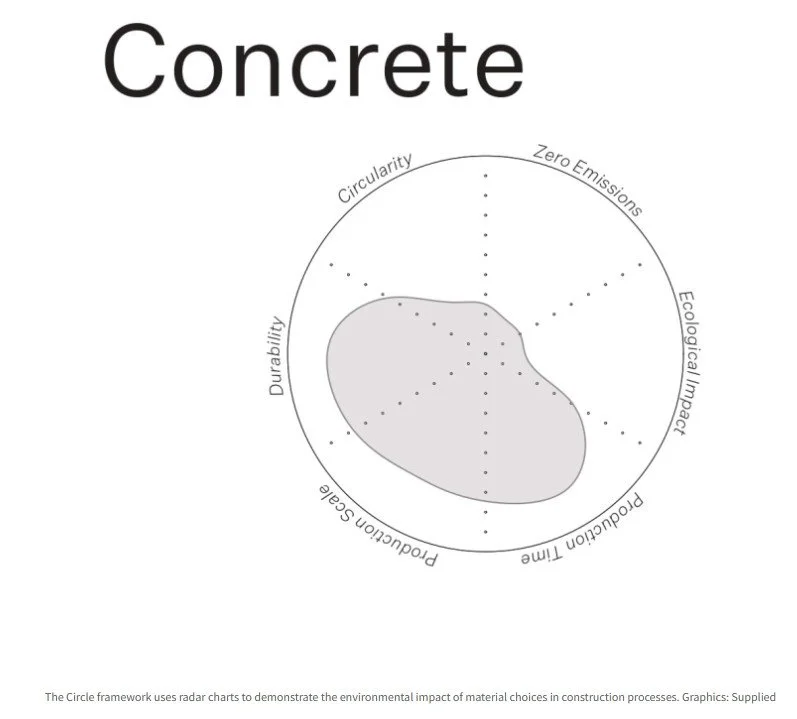
Project Circle uses a simple visualisation – a ‘spider diagram’, or ‘radar chart’, often used in sports metrics – to compare materials.
It conveys how some natural or bio-based materials might work well within planetary boundaries, assessing their performance in terms of emissions, impact on ecosystems, and potential reusability, while also evaluating them against current industrial realities of scale, speed, and durability.
The results show how little we have been considering our choice of materials.
Think about it – do you know where the building materials for your house come from?
The clothes you’re wearing almost certainly have a little tag indicating their provenance – yet in most cases, people have little idea about this most fundamental aspect of the houses they live in.

Materials existed before the building and will continue to exist afterwards. The building itself is just a frozen moment in which those materials are assembled in a certain way.
It’s those material flows that can indicate how sustainable (or not) a building might be.
Whenever you make a building, you can imagine a ‘hole’ appearing somewhere else – really, many holes – representing those materials being extracted.
These largely opaque processes can be positive or negative for environments, but little of this impact is understood, and very little of it is legislated in Australia.
If your building is comprised of mainstream materials, like concrete, steel, brick and glass, their impact is typically highly damaging.
Even a potentially ‘planet-aligned’ material like timber is often imported into Australia – despite our capacity for forestry – with half routinely failing traceability testing about its origins.
Mainstream practice in design and construction has largely stopped thinking about materials in any meaningful way, leaving all those upstream impacts out of sight, out of mind.
But there is an alternative.
The alternative
Project Circle, led by me and colleagues Dr Chris Jensen and André Bonnice, highlights ‘planet-aligned’ materials – hemp, straw, timber, stone and earth – which perform strongly in their potential for circularity, their production emissions, and their ecological impact, especially when locally sourced and responsibly managed.
These materials aren’t new. But when we compare them to the volumes of mainstream construction materials used, they simply aren’t making a big enough dent in the industry.
The inconvenient truth is that focusing on productivity, efficiency, and scale without considering materials will only make things worse, more quickly.
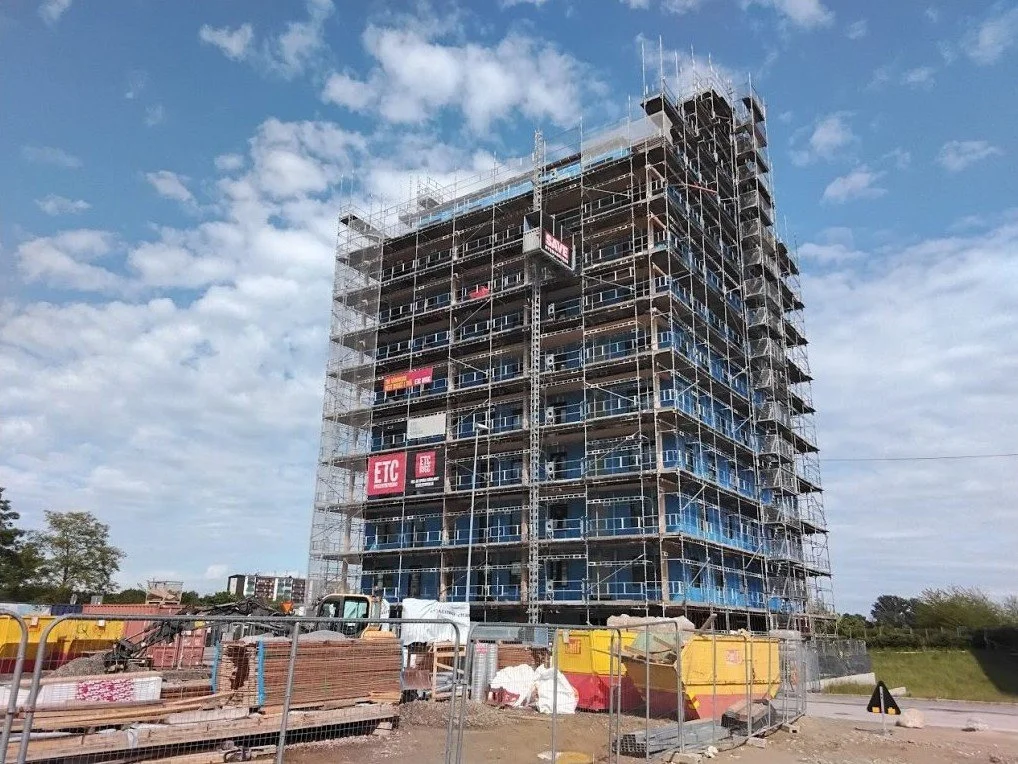
The Hyllie building in Malmö, Sweden, during construction. It features straw panels within a timber core, boasting a mighty 12 storeys. Picture: Herbert Gruber/asbn
Instead, the sector must reorient rapidly around circular and natural materials.
There is a rich and diverse palette of viable regenerative materials, full of possibility, and they are ready to be deployed – as long as we’re willing to be inventive.
Reimagined potential
In the fable of the Three Little Pigs, houses of straw and sticks were no match for the Big Bad Wolf. But we’ve come a long way since then.
A new building in Malmö, Sweden, built from timber and hi-tech compressed straw cassettes, boasts a mighty 12 storeys and recently, Danish schools have been built using thatched facades from local straw – so it seems that old fable may need updating in line with contemporary building technologies.
Then there’s a low-emissions Stone Demonstrator in London and beautiful French social housing projects built with rammed earth recovered from excavations of the nearby Paris Metro.
These materials are ancient, but are used in modern ways and often hiding in plain sight. And they prove that they’re capable of much larger projects than we thought.
For instance, Australia is one of the largest per-capita wheat straw producers, yet much of that straw is burned.
If around 5 per cent could be diverted into making new construction materials, that straw could build an estimated 100,000 homes per year. We might simply need to reimagine its potential, using both new and old technologies.
Green House, Blue House, Aqua House
Making these circular buildings tangible in Australia is integral to achieving the necessary changes in the industry.
That’s why our research developed plans for three prototypes – the Green House, Blue House and Aqua House – to do just that.
The Green House explores grown materials like straw and timber, the Blue House reuses old materials like concrete panels and salvaged timber, and the Aqua House embraces stone as a crucial, low-emissions alternative.
These model prototype buildings show how circular materials might underpin a regenerative construction sector. And importantly, one that has the potential to scale.
Currently, making buildings is a highly destructive process.
But what would it mean to say that to build is to grow? Or to regenerate? That a building might make our shared soils healthier, our air and water cleaner?
What if building could be closer to farming than mining, architecture closer to agriculture?
Getting there will require rethinking much of what the industry currently takes for granted, but our research makes it clear how exciting and truly valuable the shared outcomes could be.
The ‘dark matter’ hurdle
Research is clear-eyed about what stands in the way.
Material choices don’t happen in a vacuum – they are shaped by what we call the dark matter of regulation, policy and finance.
Designing new public policy and creating demand through public procurement isn’t easy, but we have some great examples globally.
France has passed laws mandating that every new public building must be 50 per cent timber or equivalent. Denmark has put a ceiling on embodied emissions in its building code, preferencing low carbon materials.
It’s time for Australia to follow suit and embrace the abundance of circular and low-emissions materials at our disposal.
This atticle has been republished under Creative Commons license. Read original here.