
By Dr M. Reza Hosseini, University of Melbourne
Artificial intelligence is no longer just a software tool. It has become the world’s most demanding construction client – with some concerning implications
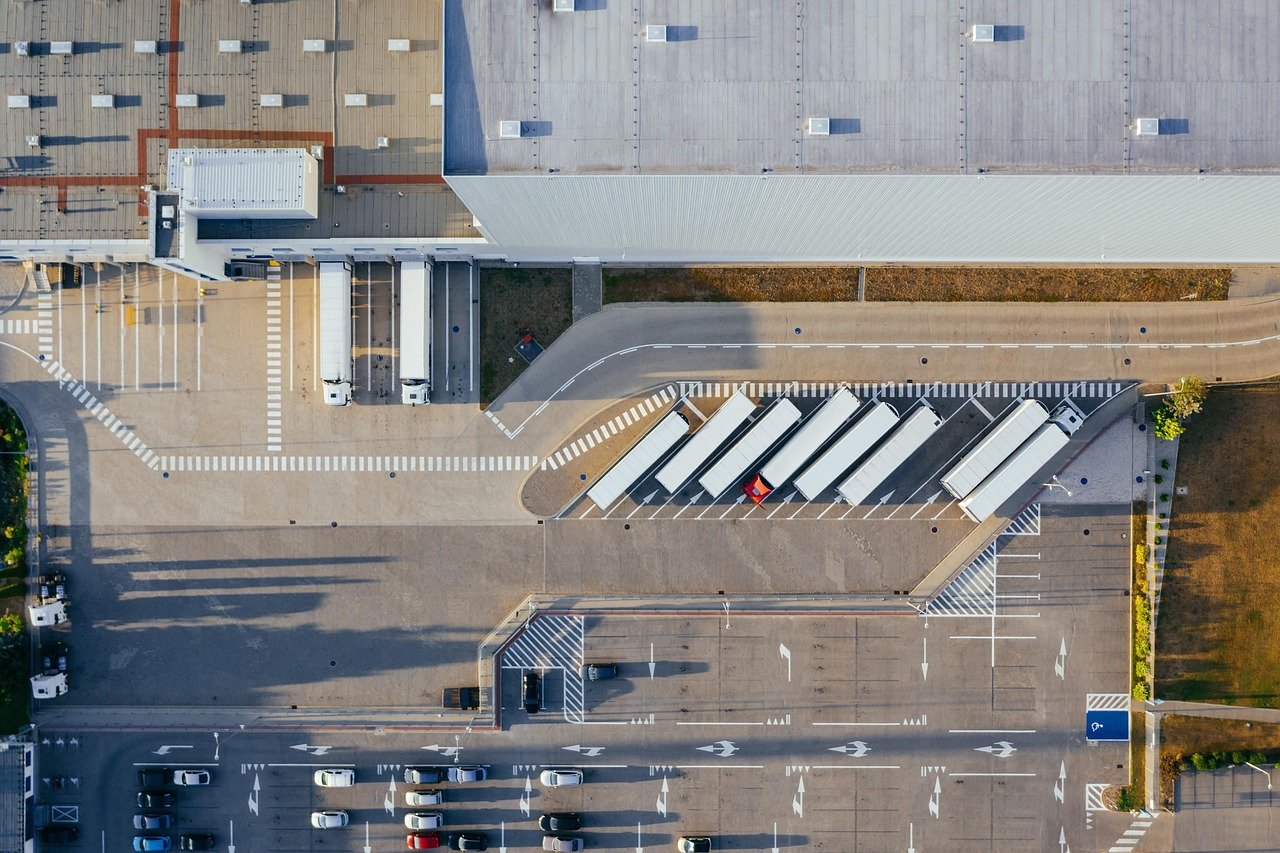
In late 2024, a new building broke ground in Western Sydney that will draw more electricity than 140,000 homes – roughly the power demand for a mid-sized Australian town like Geelong.
But it’s not a power station, a hospital or a factory. It’s a building designed to run artificial intelligence (AI).
CDC Data Centres' new hyperscale campus in Western Sydney’s Marsden Park is set to become the Southern Hemisphere’s largest data centre. And it is just one of hundreds under construction around the country.
For many years, digital tools have been changing the construction industry. AI has since brought about an unprecedented shift in how projects are conceived, delivered and managed.
It can optimise floor plans, catch design clashes in 3D models and reduce waste on site. And now, we are seeing something fundamentally different: AI has become the client.
The AI industry is the most capital-intensive, energy-hungry client the built environment has ever served. And the scale of this consumption is now quantifiable, rivalling the largest infrastructure projects ever built.
AI = Astronomical Increase
According to the Stanford AI Index 2026, global AI data centre power capacity grew from around 0.15 gigawatts in early 2022 to 29.56 gigawatts (GW) by the end of 2025 – that's a nearly-200-fold increase in under four years.
To put that in context, one gigawatt is enough to power 750,000 to a million homes and 29.56 GW is roughly equivalent to the peak electricity demand of the entire state of New York.
The Stargate project, a joint initiative between OpenAI, SoftBank and Oracle, carries a price tag of over US$100 billion for a single campus in Texas. That’s about twice the budget of Australia’s largest renewable energy project, Snowy 2.0.
And it's no longer only an offshore phenomenon.
Plans newly announced for Project Meridien, a one-gigawatt AI facility proposed on Karajarri country south of Broome, would put Australia in the same gigawatt class.
The consortium, in which the Karajarri Traditional Lands Association is a one-third partner, plans to start with around 240 megawatts from late 2029 and scale to a full gigawatt.
Notably, considering the sheer volume of consumption these centres create, this project aims to be powered by 90 per cent renewables and use a closed-loop cooling system that recycles water rather than consuming it.
Every one of these facilities has to be designed, engineered and built. That means construction jobs – and not in Silicon Valley, but here.
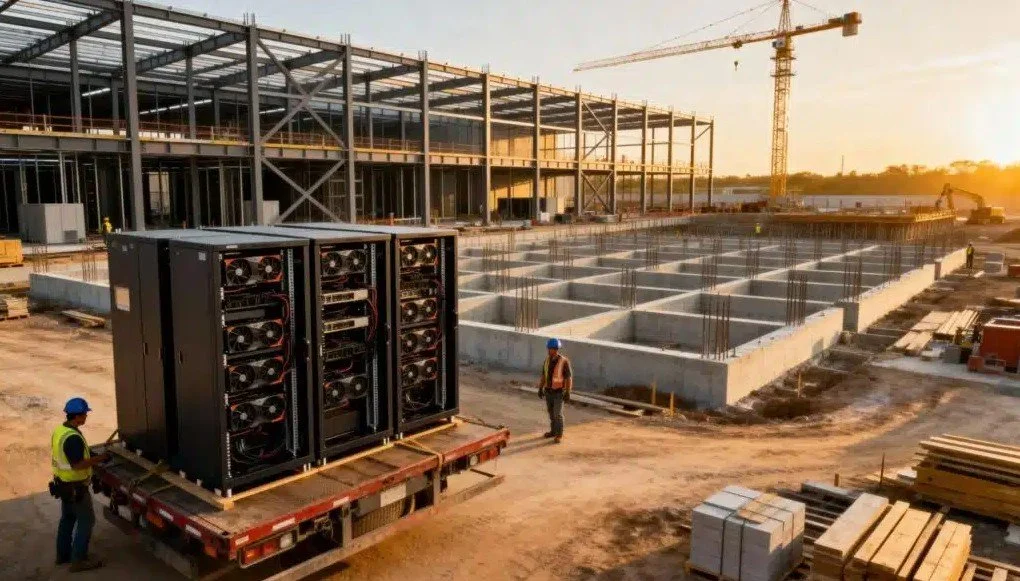
Is AI taking jobs or making them?
This is the part of the AI story that most people have not heard.
While the dominant narrative is that AI threatens jobs, the current wave of data centre construction is creating thousands of new roles.
In fact, research suggests that for every operational role at a data centre there are potentially 15 construction jobs created during the build phase.
Applied to Australia’s current pipeline, that translates to tens of thousands of roles: electricians, mechanical engineers, project managers, crane operators.
In Western Sydney alone, the pipeline expects to deliver around 6,000 construction jobs.
I have seen this first-hand.
On recent site visits to Hickory, one of Victoria’s major concrete manufacturers, the yard was covered with data centre elements – wall panels and structural pieces two to three times the size of anything produced for a standard commercial building.
The reinforcing bars are 75 millimetres in diameter. This is not a little bigger than normal. Bars this size are used for the enormous, concentrated loads found in the foundations of mega-skyscrapers like the Burj Khalifa in Dubai.
The building of these data centres is not business as usual for the construction industry. It is an entirely new category of work.
Are we ready for it?
There’s a lot of growth and development when it comes to construction for AI, and Australia has big plans for the future of the industry. But there is also tension.
Australia is short of construction workers.
Infrastructure Australia projects a peak shortage of 300,000 workers by mid-2027, and the Housing Industry Association estimates the country needs 83,000 more tradies just to meet the National Housing Accord target of 1.2 million new homes by 2029.
Data centres and housing draw from some of the same finite resources – particularly electrical trades, grid capacity and planning approvals.
In Sydney, local councils have raised concerns that the pace of data centre development is crowding out housing as well as straining water and power networks.
The National Growth Areas Alliance pointed out that the same councils expected to deliver 26 per cent of Australia’s new homes are also absorbing most of Sydney’s data centre pipeline.
The workforces are not identical.
Data centre construction demands highly specialised trades like high-voltage electricians, industrial cooling technicians and advanced mechanical engineers – jobs that only partly overlap with residential building.
But in a market already stretched thin, even partial overlap matters.
When a hyperscale project offers premium wages to secure electricians for 18 months, those workers are unavailable for housing.
So, it remains to be seen – can both of these targets exist in harmony?
For policymakers, the implication is planning reform that treats these pressures as connected rather than separate.
For the construction industry, it's an investment signal: the firms and workers who develop expertise in critical digital infrastructure will find no shortage of demand.
And for the broader community, it is worth knowing that the AI economy is not abstract or distant, with data floating above us in an imaginary cloud.
It is being poured in concrete, wired with copper and built by Australian trades right now.
This article has been republished from the Pursuit under Creative Commons license. Read original.