
By Oliver Nichols, Director of RLB in New South Wales
When conflict escalated in the Middle East earlier this year, concerns emerged that higher fuel prices, freight charges and material costs would place additional pressure on construction projects. While these pressures did emerge, the impact on Australia’s construction sector has been far more contained than initially anticipated.
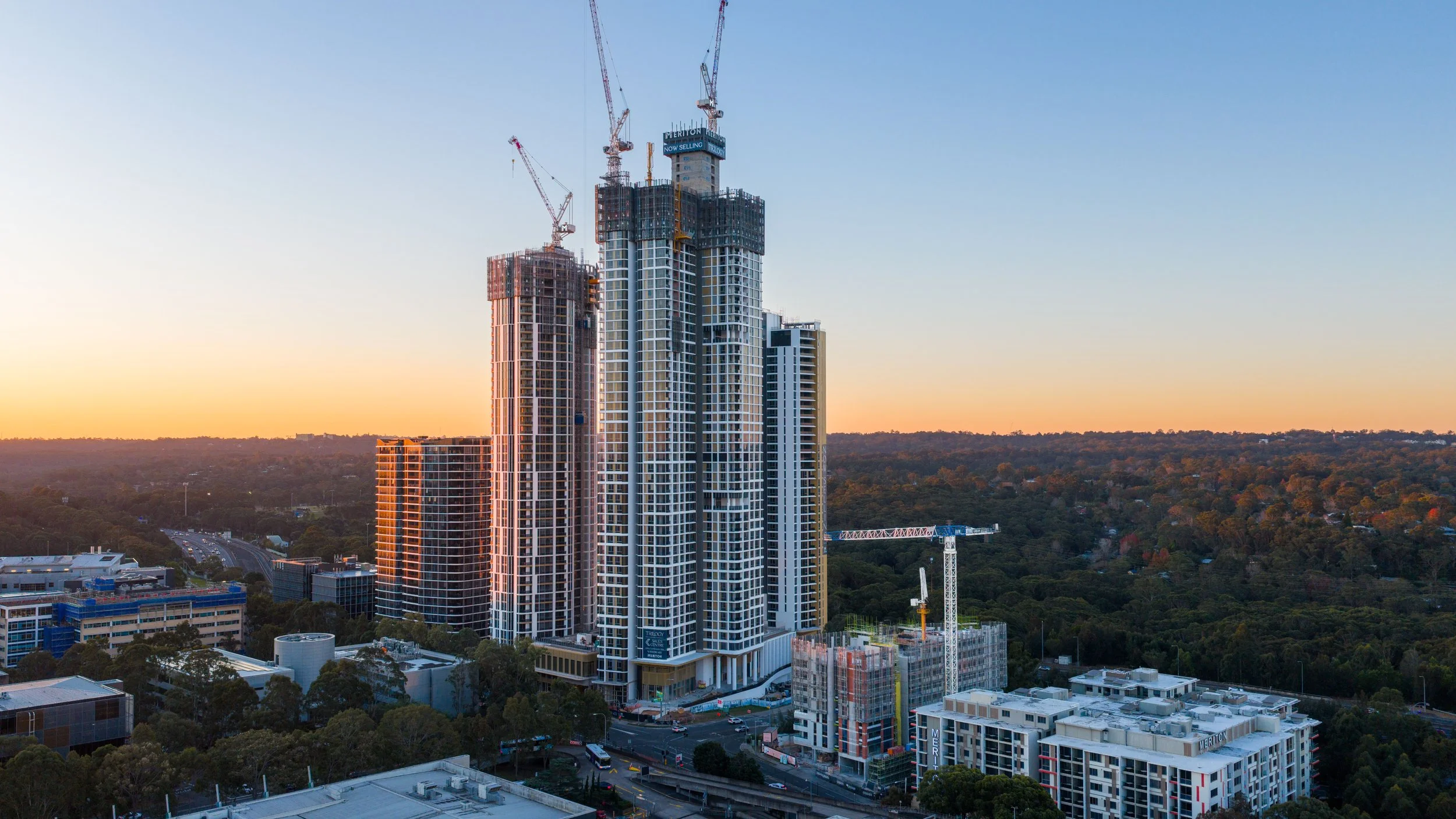
Image: Macourt Media
According to Rider Levett Bucknall’s latest Construction Market Update, cost escalation continues to be driven primarily by domestic labour shortages, infrastructure demand and capacity constraints rather than geopolitical events alone. While the conflict has added between 1.5 and 3.5% to project costs in some sectors, the effect has been uneven and largely absorbed by the market.
“While the conflict created a short-term shock through fuel, freight and energy-linked inputs, domestic capacity constraints remain the dominant driver of construction cost escalation across Australia,” said Oliver Nichols, Director, Oceania Research & Development at Rider Levett Bucknall.
“The market has proven more resilient than many anticipated. Labour availability, contractor capacity and project pipelines continue to have a greater influence on pricing outcomes than global events alone.”
Initial shock eases
The outbreak of conflict triggered sharp increases in diesel, shipping and oil-linked construction inputs, creating uncertainty across the industry and shortening tender validity periods. Contractors and project teams responded quickly, adopting shorter price validity periods, earlier procurement strategies and risk-sharing contract structures to manage volatility and improve cost certainty.
However, many of the conditions that initially raised concerns have since moderated. Diesel prices have eased from their peak, shipping pressures have stabilised and several input surcharges have reduced, lowering immediate escalation risk across most capital city markets. As a result, tender pricing outcomes have remained more stable than anticipated, particularly in competitive markets where contractors have absorbed some of the increased costs rather than passing them directly to clients.
While the conflict has undoubtedly influenced construction costs, it has not triggered the sustained market-wide escalation many had anticipated at the start of the year.
Local conditions shape market outcomes
The impact of the conflict has differed across Australia depending on local demand conditions, labour availability and exposure to freight-sensitive inputs.
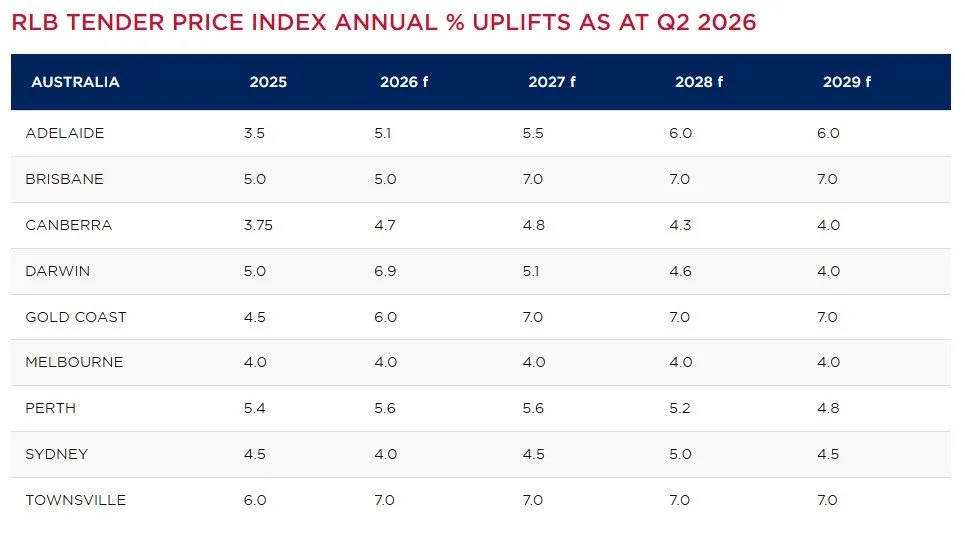
In Sydney and Melbourne, competitive market conditions have helped absorb much of the additional cost pressure. While fuel and logistics costs increased, strong competition for work and balanced workloads have limited the extent to which these increases have flowed through to tender pricing. As a result, both cities continue to experience some of the lowest escalation forecasts nationally.
Brisbane presents a different picture. Construction activity remains elevated across health, infrastructure and Olympic-related programs, creating strong demand for labour and resources. While the direct impact of the conflict has been relatively modest, any future increases in fuel, freight or material costs are likely to be amplified by existing capacity constraints and a substantial forward pipeline of work.
Perth and Adelaide continue to face similar challenges. In both markets, strong public sector investment, defence activity, infrastructure programs and constrained labour availability remain the primary drivers of escalation. Conflict-related cost increases have contributed additional pressure but are not the dominant factor influencing pricing outcomes.
Darwin remains the market most exposed to global supply chain disruption due to its reliance on imported materials and long-distance freight networks. Although recent stabilisation in diesel pricing has eased some immediate pressure, procurement uncertainty and logistics risks continue to influence project costs and planning decisions.
Across regional centres such as the Gold Coast and Townsville, escalating workloads, major government investment and preparation for future Olympic-related activity continue to place upward pressure on construction costs, reinforcing the influence of local market conditions over global events.
Structural pressures remain
While the immediate shock associated with the conflict has eased, the broader construction market remains under pressure from a range of structural factors.
Persistent skilled labour shortages continue to affect all major capital cities, while growing demand from infrastructure, defence and energy projects is placing further strain on available resources. The rapid expansion of data centre construction is also increasing competition for specialist trades, services contractors and electrical capacity.
At the same time, high levels of public sector work are challenging the feasibility of some private sector developments, particularly in markets where contractor availability is already constrained. Ongoing uncertainty in global energy and freight markets also remains a risk factor, even as immediate pressures have eased.
These underlying conditions mean Australia’s construction sector remains structurally constrained despite improving stability in international markets.
What the forecasts tell us
RLB forecasts construction costs to rise between 4 and 7% nationally during 2026, with stronger increases expected in Brisbane, Adelaide, Perth, Darwin, the Gold Coast and Townsville. Sydney, Melbourne and Canberra are forecast to experience comparatively lower rates of escalation.
Importantly, these forecasts reflect local capacity constraints and project demand more than geopolitical uncertainty. While global events can create short-term volatility, Australia’s construction markets continue to be shaped primarily by labour availability, infrastructure pipelines and competition for resources.
Looking ahead
Australia’s construction markets are expected to continue diverging based on local demand, labour availability and investment activity.
While the Middle East conflict contributed to a period of uncertainty and higher input costs, the sector has absorbed the impact more effectively than initially feared. Looking ahead, construction cost escalation is likely to be shaped primarily by domestic capacity constraints, particularly in infrastructure, defence, housing and data centre development, rather than geopolitical events alone.
For project owners and investors, the key challenge remains understanding the specific conditions affecting individual markets rather than relying on national averages. As recent months have demonstrated, local capacity constraints continue to have a greater influence on pricing outcomes than global headlines.
This article has been republished with permission from RLB. Read original or click through to the full report.